Downers Grove Epoxy Flooring installs metallic epoxy floor systems in Downers Grove, IL, serving surrounding cities including Hinsdale, Burr Ridge, Western Springs, La Grange and Westchester. In more than 20 years of grinding and coating concrete, we have learned that metallic epoxy is the most rewarding floor we install and the least forgiving, because every flaw in the slab and every hesitation in the installer shows in the finished surface.
A metallic floor uses pearlescent pigments suspended in a clear epoxy that is poured, spread and worked by hand while it flows. The result is a floor with depth and movement, from soft marbled clouds to bold lava flows, and no two installs look exactly alike. That uniqueness is the appeal, and it is also why the preparation underneath has to be right.
Every metallic floor we install starts with a diamond-ground or shot-blasted slab, a moisture test written into the scope, and a proposal that names the product line, the number of coats and the finished thickness. Below we explain where metallic epoxy works, the looks you can choose, how we install it, and how to keep it looking the way it did on day one.
Where Metallic Epoxy Floors Work Best
Finished Basements and Living Spaces
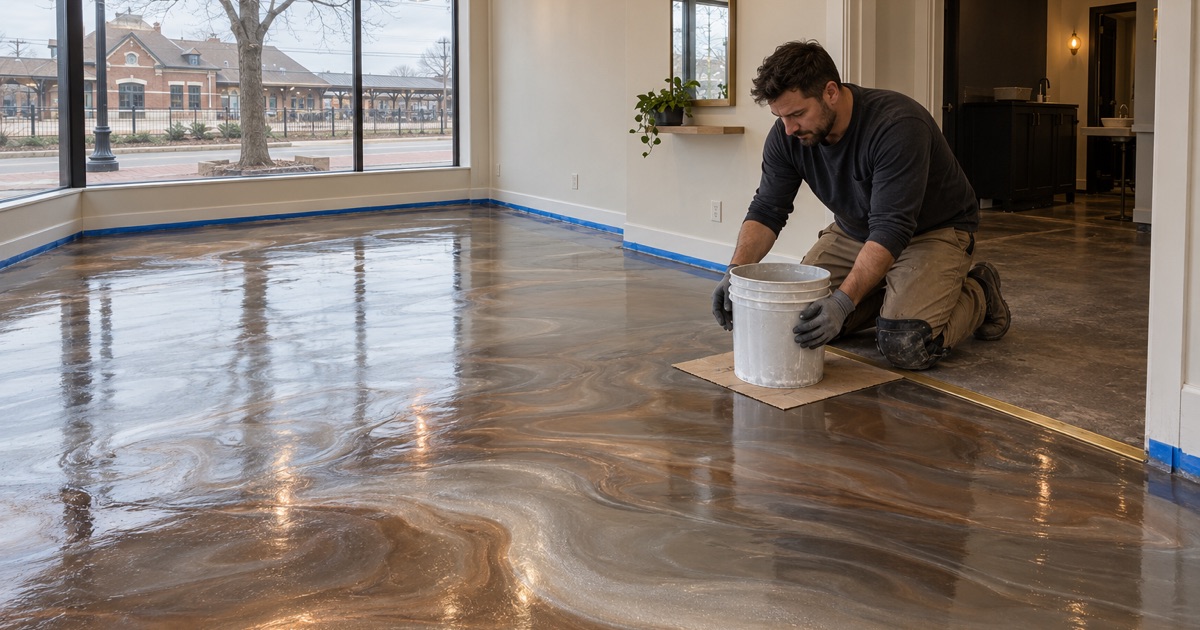
A metallic floor turns a plain basement slab into a finished space without adding the height of a subfloor or the risk of carpet in a damp room. It works well in family rooms, home theaters, bars and game rooms, where the gloss and depth read as a deliberate design choice rather than a utility coating.
Basement slabs carry moisture from the soil, though, and many local basements were poured in the mid-century era with no vapor retarder underneath. We test before we price, and if readings call for it, a moisture-mitigation primer goes under the metallic system so vapor does not lift the floor later.
Showrooms, Salons and Retail Floors
Car showrooms, salons, boutiques and galleries use metallic epoxy because the floor becomes part of the brand. The reflective finish brightens the space, and colors can be matched to a logo or interior palette. Because the floor is seamless, there are no grout lines or tile edges to trap dirt or chip under display stands, which keeps a sales floor looking sharp between deep cleanings.
Commercial floors also see more traffic and more cleaning, so we build them with a heavier topcoat and phase the work around opening hours, using overnight and weekend windows when a space cannot close.
Offices, Lobbies and Event Spaces
Offices and lobbies get a seamless, easy-clean floor with more visual interest than a solid coating. In event spaces and taprooms, metallic floors stand up to foot traffic and spills while giving the room a distinctive look under changing light. In offices that need wiring or equipment changes later, we plan the layout so a future repair can be blended into a section rather than forcing a full recoat, and we keep a record of the colors used.
Display Garages and Workshops
Collectors and hobbyists often choose metallic epoxy for a display garage, where the floor sets off the cars or bikes on it. A metallic garage floor shows salt residue and tire marks more than a flake floor, so we pair it with a polyaspartic topcoat and recommend it mainly where the garage is not taking a full winter of brine every day.
Metallic Looks and Design Choices
Marbled, Lava and Ocean Effects
The pattern comes from how the metallic layer is worked while it is wet. Rolling, troweling, brushing and directed solvent sprays create soft marbling, bold veining, swirling lava flows or cell-like ocean effects. We show you finished sample boards and talk through the movement you like before any material is mixed. Large rooms read best with broad, slow movement, while small rooms and bars can carry tighter, busier patterns without feeling crowded, so the size and lighting of the space guide the technique as much as the photos you bring.
Pigment Colors and Combinations
Metallic pigments come in silvers, golds, coppers, charcoals, blues, greens and many custom blends, and two or three colors can be layered for depth. Lighter colors hide dust and fine scratches better, while dark charcoals and deep blues create the most dramatic reflection but show wear sooner. We test your chosen blend on a sample board under your own lighting, because warm bulbs, cool LEDs and daylight from a basement window can shift how a metallic color reads by a surprising amount.
Gloss Level and Slip Resistance
Most metallic floors are finished in high gloss to show off the depth of the pigment. In garages, entries, kitchens and anywhere the floor can get wet, we add a fine aggregate to the topcoat or move to satin, so slip resistance is built into the finish rather than promised as a slogan.
Borders, Inlays and Logos
Saw-cut lines, contrasting borders and inlaid logos can frame a metallic field or set apart zones in a showroom or bar. These details are planned before the base coat goes down, because they are built into the layers rather than painted on afterward.
How We Install a Metallic Epoxy Floor
Grinding to a Flat, Sound Surface
A metallic coating is self-leveling, so it flows toward low spots and pools there, and it telegraphs every gouge, patch and crack. We diamond grind the slab to a measured ICRI concrete surface profile with vacuum dust capture at the machine, then repair cracks, spalls and low spots so the surface is flat and sound.
Old paint, mastic and failing coatings are removed completely. If the slab needs repair or replacement before it should be coated, we say so before quoting rather than hiding the problem under a decorative layer.
Moisture Testing and Primer
We test with an ASTM D4263 plastic sheet test and step up to calcium chloride or in-situ relative humidity testing when the slab calls for it. A primer or moisture-mitigation primer seals the slab so air and vapor do not bubble up through the metallic layer and leave pinholes in the finish.
Base Coat, Metallic Layer and Manipulation
A tinted base coat sets the background color, then the metallic epoxy is poured and worked in sections by a crew that knows how long the material stays open. Temperature, humidity and the dew point spread at the slab surface all affect flow and working time, so we measure them before we start rather than trusting the calendar. A slab too close to the dew point can develop amine blush, a waxy film that clouds the metallic layer and weakens the bond of the topcoat, and that is a defect no amount of artistry can hide.
Clear Topcoat and Cure
Once the metallic layer cures, a clear topcoat of 100% solids epoxy, polyaspartic or polyurethane protects it from scratches and, where sunlight reaches the floor, from ambering. We leave written walk-on and furniture times and care instructions, so the floor is not loaded before it is ready.
Caring for a Metallic Epoxy Floor
Everyday Cleaning
Dust mop or vacuum regularly, because grit under shoes is what dulls a glossy topcoat fastest. Clean with a pH-neutral cleaner and a soft mop, and avoid harsh solvents and abrasive pads that can haze the surface. Spills of oil, wine or cleaning chemicals should be wiped up promptly rather than left to sit, since a glossy topcoat resists staining best when nothing is allowed to dwell on it for days.
Protecting the Finish
Felt pads under furniture, walk-off mats at doorways and care when moving heavy items keep a metallic floor looking new. In a garage, rinsing off salt and brine during the winter matters even more on a metallic finish than on a flake floor.
Refreshing the Topcoat
When the topcoat eventually shows wear in traffic lanes, it can be cleaned, abraded and recoated without disturbing the metallic layer beneath. That recoat restores the gloss and protection for far less than a full new floor, which is one reason we build the topcoat to the thickness named in your proposal.
- 20+ Years of Floor Work
- Moisture Tested in Writing
- Free Written Quotes