
Downers Grove Epoxy Flooring installs industrial epoxy flooring in Downers Grove, IL, serving surrounding cities including Hinsdale, Burr Ridge, Western Springs, La Grange and Westchester. In more than 20 years on concrete, we have seen industrial floors fail for the same few reasons again and again: a slab that was never properly profiled, moisture nobody tested for, and a coating that was simply too thin for the forklifts running over it.
Our industrial work starts with the slab and the traffic. Floors are shot blasted or diamond ground to an ICRI concrete surface profile matched to the system, cracks, spalls and failed joints are mapped and repaired, and a moisture test is written into the scope before the price is final. The proposal names the product line, the number of coats and the finished thickness for each zone of the floor, so plant managers can check the result against the specification.
Below we cover the industrial systems we install, how we match them to traffic and chemicals, and how we work around facilities that cannot stop. If you are comparing bids, the zone-by-zone thickness and the preparation method are the two lines worth reading first.
Industrial Floor Systems We Install
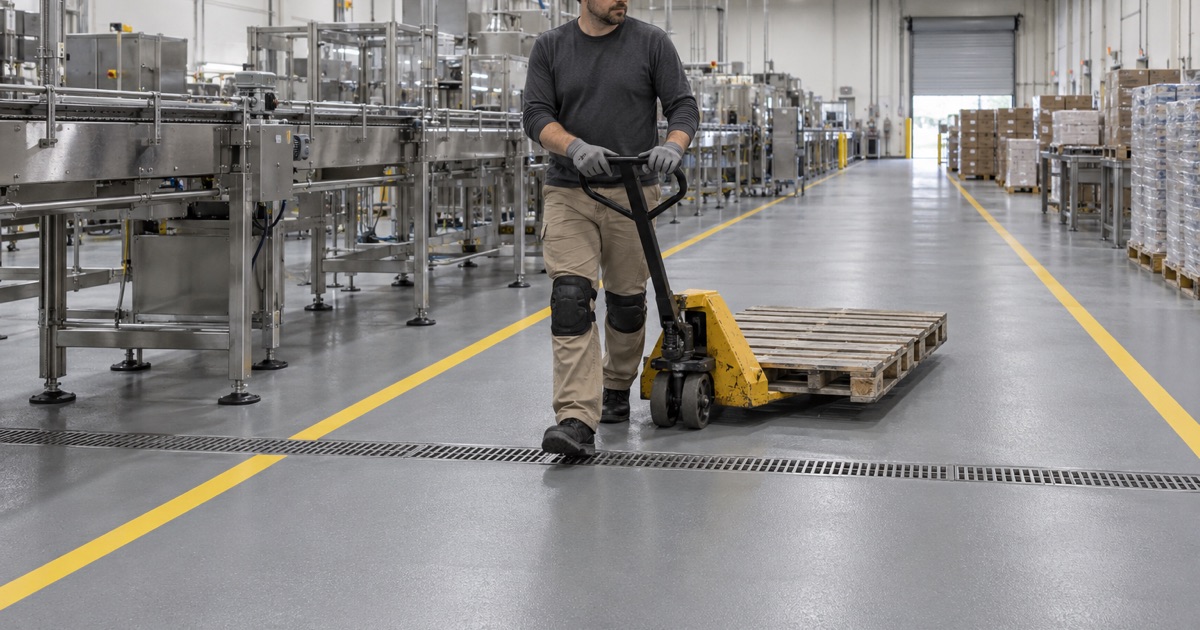
High-Build 100% Solids Epoxy
High-build 100% solids epoxy is the workhorse of industrial flooring. It bonds well to a properly prepared slab, builds thickness quickly and resists abrasion, impact and many common chemicals. For light manufacturing, assembly areas and warehouses with moderate forklift traffic, a multi-coat epoxy system with a broadcast for texture is often the right balance of cost and durability.
Troweled Epoxy Mortar for Heavy Wear
Where floors take heavy impact, dragging pallets or steel-wheeled carts, a troweled epoxy mortar system adds far more thickness and compressive strength than a roller-applied coating. Mortar systems also level rough or damaged slabs as they go down, which makes them useful when an old industrial floor has been worn into ruts.
Urethane Cement for Heat, Washdown and Chemicals
Urethane cement handles thermal shock, hot water washdowns, steam cleaning and aggressive chemicals that would soften or crack an epoxy. It also tolerates more moisture in the slab than most epoxies. Food and beverage processing, wet production rooms and areas near ovens or fryers are the usual places we specify it.
Quartz Broadcast and Slip-Resistant Textures
Industrial floors often need texture for safety, especially where oils, coolants or water are present. A quartz aggregate broadcast built into the system provides a durable slip-resistant surface, and the texture is specified by the broadcast and topcoat rather than promised as a slogan. We match the profile to how slick the floor actually gets.
Matching the Floor to Traffic and Exposure
Forklift and Pallet Jack Wheel Loads
Forklift and pallet jack wheels concentrate heavy loads onto small contact areas, and travel lanes and turning points take the worst of it. Thin coatings wear through to bare concrete in those lanes within months. We specify thicker systems in travel lanes, dock approaches and turning areas, and we can vary the build across the floor so heavy zones get more protection than storage areas.
Chemical Resistance
Oils, hydraulic fluid, coolants, acids, solvents and cleaning agents each attack coatings differently. We ask what is actually spilled on your floor and how often, then choose a system and topcoat with resistance matched to that list. A floor rated for the wrong chemicals can look fine at installation and fail the first time a drum leaks.
Static Control and Special Areas
Electronics assembly and sensitive equipment areas may need static-dissipative or ESD flooring held within a defined resistance range. Battery charging rooms, wash bays and maintenance pits have their own requirements too. We scope these areas separately so each one gets the right system rather than one coating stretched across the whole building.
Preparation, Joints and Repairs
Shot Blasting and Grinding
Large industrial floors are usually shot blasted, which removes contamination and leaves a uniform profile in a single pass with dust drawn into a collector. Edges, columns and areas around racking are ground with diamond tooling under vacuum. Old coatings, oil-soaked concrete and curing compounds are removed so the new system bonds to sound concrete.
Joints, Cracks and Spalls
Control joints in industrial slabs take a beating from wheels, and broken joint edges create bumps that damage forklifts and loads. We rebuild spalled joint edges, fill or re-cut joints according to how active the slab is, and repair cracks and spalls before coating. When areas of the slab need replacement rather than repair, we say so in the estimate.
Moisture and Warranty Exclusions
Industrial slabs on grade can carry significant moisture, and coating warranties typically exclude failures from moisture vapor transmission and hydrostatic pressure. We test before pricing, and when readings are high, a moisture-mitigation primer or a moisture-tolerant urethane cement becomes part of the system.
Working in Operating Facilities
Phasing, Nights and Weekends
Most plants and warehouses cannot close for a full floor replacement. We phase work by zone, coordinate around shipping schedules and production lines, and use overnight and weekend windows. Fast-curing systems can return sections to service quickly, with cure times confirmed against slab temperature and dew point rather than assumed.
Racking that cannot move is worked around, with coating run to the base plates and the aisles prioritized where traffic is heaviest. When racking can be relocated in stages, we coordinate the moves with your team so stock stays accessible throughout the job.
Dust, Odor and VOC Compliance
Dust is captured at the blaster and grinder and bagged, never washed toward floor drains or storm inlets. Downers Grove sits in the Chicago 2015 ozone nonattainment area, and Illinois VOC limits for industrial maintenance and floor coatings bind the person applying them, so we choose compliant products and plan ventilation around occupied areas.
Striping and Safety Markings
Aisle lines, pedestrian walkways, forklift lanes, hazard zones and equipment outlines are coated into the floor as part of the system. Coated-in markings wear with the floor instead of peeling like tape, and laying them out with your team during planning keeps traffic patterns clear from the first day back in service.
- 20+ Years of Floor Work
- Moisture Tested in Writing
- Free Written Quotes