Downers Grove Epoxy Flooring has spent more than 20 years installing epoxy flooring in Hickory Hills homes and buildings, and part of that work is telling an owner which rooms should not get a resin coating at all. Most concrete is better off coated: a ground and sealed slab sheds water, cleans quickly and stops dusting. A few rooms need something no coating can give, and the most common one is any room where people jump and land.
Before a price is final, we walk the whole floor plan rather than quoting square footage off a sketch. Cracks, spalls and old coatings are mapped, a moisture test is written into the scope, and the proposal names the product line, the number of coats and the finished thickness, so the floor you get can be checked line by line against the quote.
That room-by-room habit matters most in mixed-use buildings, where a washroom, a classroom and an activity room open off one hallway and each asks something different of the surface underfoot. Getting that split right is worth more than any single product choice we could make.
The Cynthia Neal Center: Three Rooms, Three Floor Jobs
What the park district says the building holds
The Hickory Hills Park District runs the Cynthia Neal Administration & Recreation Center at 8047 W. 91st Place, beside Kasey Meadow Park with its splash pad, skate park and sled hill. The district’s 2024 executive-director brochure says the center was renovated in 2020 with new washrooms, and that it has a preschool room and a dance room.
That short list describes three rooms with three very different demands. A washroom floor is a wet floor. A preschool room is a floor small children sit, crawl and spill on for much of the day. A dance room is a floor people land on, again and again, often in bare feet or soft shoes.
Why we use it as an example
We have no relationship with the park district and have not inspected its floors. We do not know what the dance room is surfaced with today, or whether it sits on concrete at all. What the building offers is a clear, local picture of a question we answer in every recreation space: which rooms should be coated and which should be cushioned.
A building like this does not need one floor. It needs the right floor in each room, with clean transitions where they meet, and an installer willing to say where their own product stops being the answer.
The transitions deserve as much thought as the rooms. A coated hallway that meets a raised dance floor needs a reducer strip or a ramped edge, not a lip someone catches a toe on. We plan those edges at the walkthrough, so the coating stops at a clean, square line instead of feathering out wherever the roller ran dry.
Looking for epoxy-flooring closer to Bridgeview? See Epoxy-Flooring Services in Bridgeview.
Shock Absorption: What a Dance Room Needs and a Coating Cannot Add
What dance-safety guidance asks of a floor
Ausdance National, a dance industry body, publishes a factsheet on safe dance floors. It says the floors people dance on need to be sprung, semi-sprung or cushioned, and where possible designed specifically for dance. It warns that even in the short term, dancing or exercising on concrete floors can potentially cause injury, pain and irreversible damage.
The factsheet puts numbers on that warning: a good dance floor has a shock absorption value of at least 53 percent, against 0 percent for concrete. That is industry guidance, not a code requirement, and we treat it that way. The same sheet notes that wood is adequate unless the boards are laid on concrete.
The research on which cushioned surface works best is mixed. A 2022 laboratory study with 18 dancers found that a foam-backed vinyl floor absorbed shock better than two specialist floors, and that none of the specialist floors beat vinyl-covered concrete. Which cushion is best is still argued. Whether bare concrete belongs under jumping feet is not.
What a resin coating changes and what it leaves alone
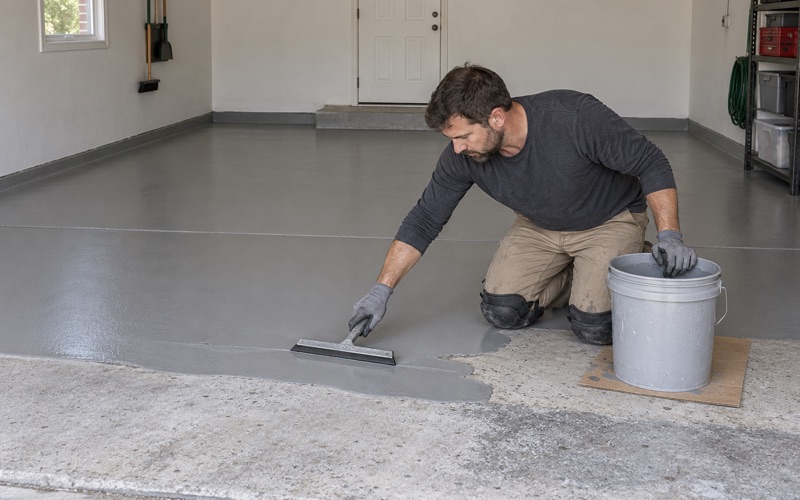
An epoxy or polyaspartic system is a few layers of hard resin bonded to a ground slab. It adds hardness, abrasion resistance, a sealed surface and a grip we can tune, from a smooth topcoat to one carrying a quartz aggregate broadcast. It adds no cushion. A coated slab stops a landing foot exactly the way the bare slab does, because the concrete underneath still does all the stopping.
Building the system thicker does not change that. A 100% solids epoxy laid heavy, or a troweled urethane cement, is tougher against impact and chemicals than a thin coat, but it is still rigid resin on rigid concrete. Thickness buys durability. It does not buy give, and give is what a dancer’s joints are asking for.
Grip is the other mismatch. The factsheet asks that ballet floors give a good degree of grip while letting the foot slide in a controlled manner, and that barefoot dance get a finer finish to avoid friction burns. The textured broadcast that keeps a wet boot from skidding on a garage floor is the wrong surface for a turn in socks.
Our answer for a dance room
For a dance room, our honest answer is not epoxy. It is a sprung or cushioned floor with a dance surface on top, which is specialist work we do not do. Our part is the rest of the building: preparing and coating the rooms around it, and leaving a flat, sound edge where a dance-floor installer’s work begins.
Where Coatings Do Belong in a Recreation Building
Washrooms and wet areas
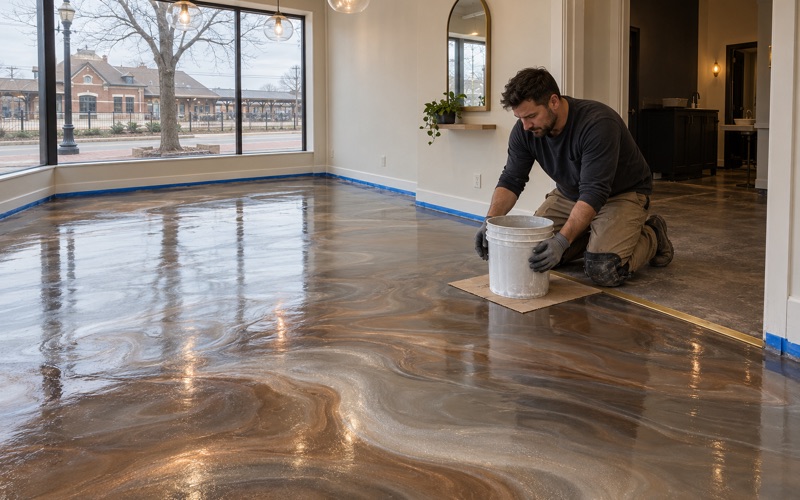
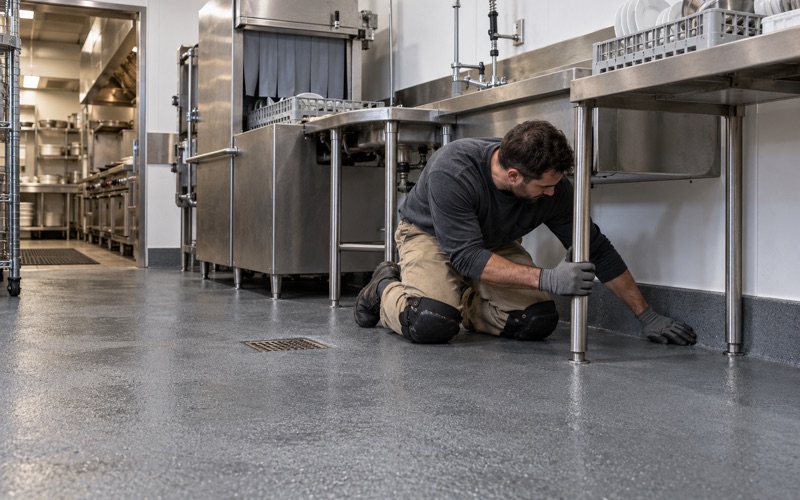
A washroom is where a seamless resin floor earns its cost. Standing water, mop water and cleaning chemicals collect at the base of every fixture, and a coating with no grout lines gives them nowhere to soak in. We usually carry the system a few inches up the wall as a cove base so the joint between floor and wall cleans like the floor.
Slip resistance in a wet room is something we specify, not something we promise. The texture comes from the broadcast and the topcoat named in the proposal, so the person reviewing the bid can see exactly what will be underfoot when the floor is wet.
Preschool and activity rooms
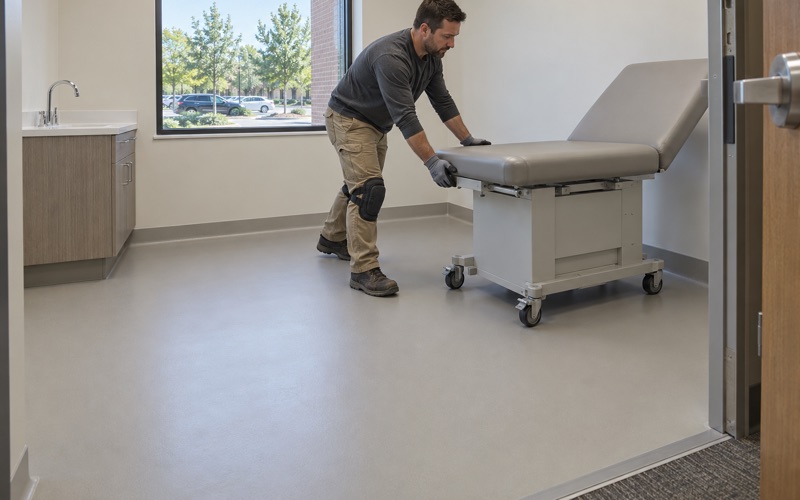
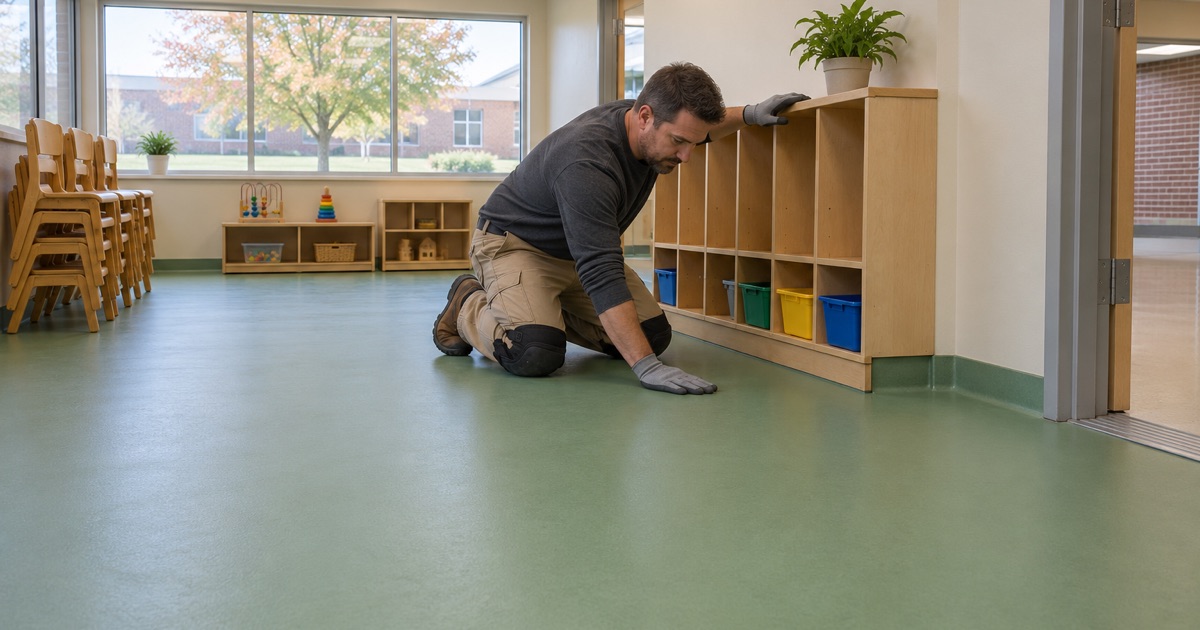
A room for small children wants a sealed floor that takes spills, glue and constant cleaning without staining or dusting. A satin finish over a ground slab reads calmer than high gloss and hides scuffs better. Many of these rooms then get rugs or play mats over part of the coated floor, which is the sensible way to add softness where children sit.
When a preschool room sits next door to a dance room, as it does in the building above, the two rooms can share a wall and still need opposite floors. The preschool side wants a sealed, scrubbable surface; the dance side wants cushion. Treating them as one flooring job is how a building ends up with the wrong answer in one of them.
Lobbies, hallways and storage
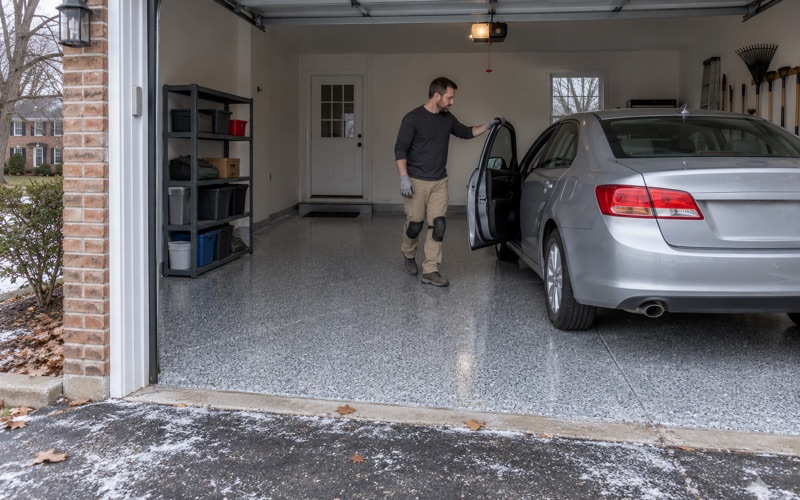
Entries take the hardest daily punishment: winter boots carrying brine and rock salt, strollers, and carts of folded tables. We build those areas with a harder topcoat and a quartz broadcast, and give storage rooms a system that shrugs off dragged equipment. Where a building cannot close, the work is phased around opening hours, with overnight and weekend windows.
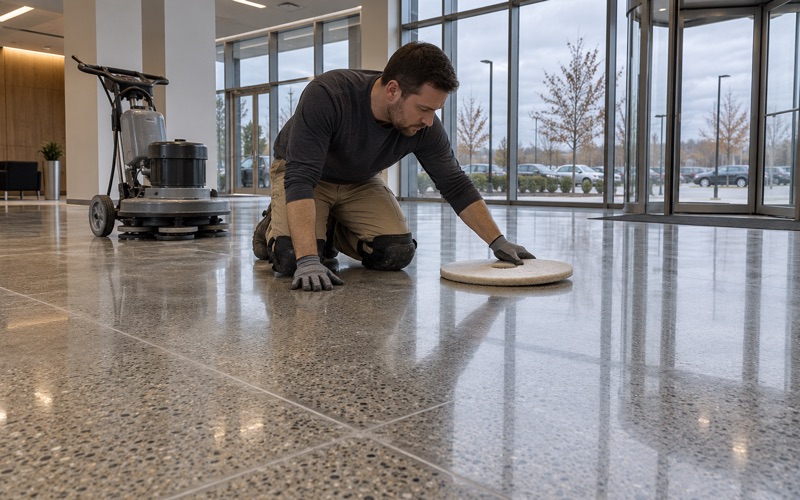
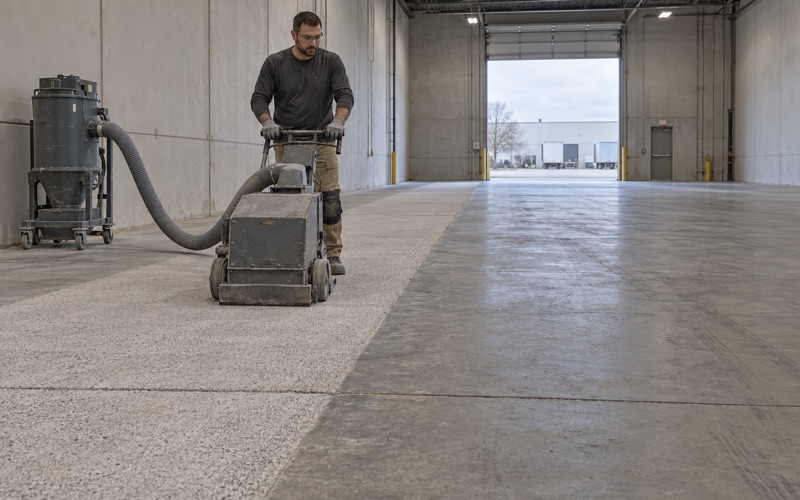
Every slab is opened with a diamond grinder or a shot blaster, never an acid etch, and the dust is captured at the machine by a vacuum instead of being rinsed toward a floor drain. Cure schedules follow slab temperature and the dew point spread at the surface, not a date on the calendar.
A recreation building’s slab gets the same moisture testing as a house. Washrooms and storage rooms on grade can hold more vapor than the dry lobby beside them, and a coating that fails from below fails the same way in a public building as in a basement. The readings go into the written scope before the price is set.
Home Gyms, Yoga Corners and Dance Practice on a Basement Slab
The same rule at home
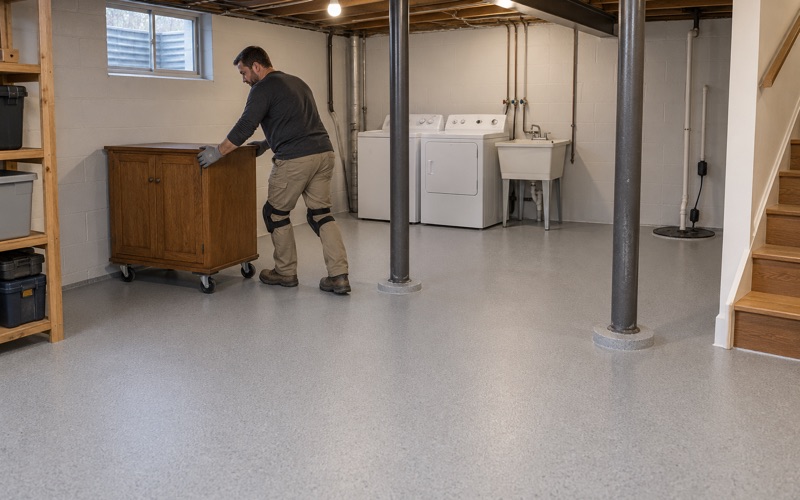
The dance-room logic applies in a basement. A coating makes a slab clean, bright and sealed, which is why it suits a home gym, a yoga corner or a practice space. It does not make the slab kind to knees and ankles. For jumping, tap or ballet practice, the answer is a cushioned or sprung surface laid over the coated floor, such as portable dance panels or a foam-backed vinyl, and our scope ends at the coating.
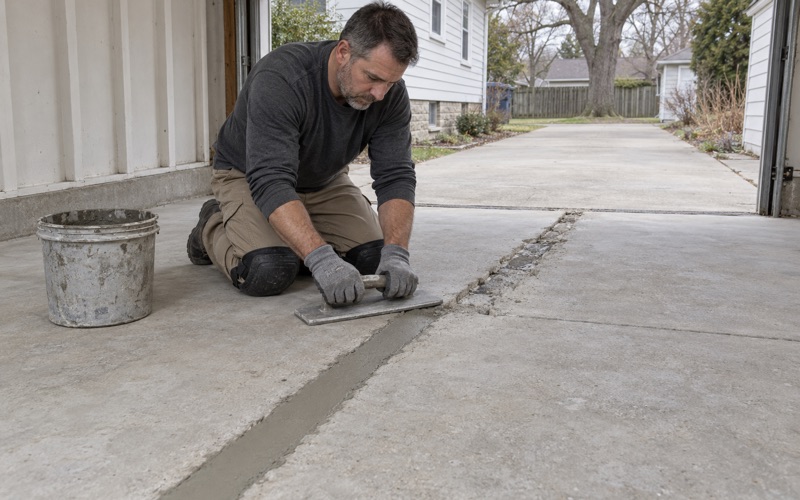
It helps to plan the room before we grind. If you know where the practice panels, the mirror wall and the mat zone will sit, we can make sure the coated floor under them is flat and free of ridges, so a portable floor lies evenly instead of rocking on a high spot. Cracks under that zone get repaired first rather than covered.
Yoga and stretching are easier. A coated slab under a good mat is a fine arrangement, and the sealed surface keeps the room from feeling like an unfinished basement.
Moisture comes first in Hickory Hills basements
Over half the houses in Hickory Hills date from 1960 to 1979. A basement slab from that era predates under-slab vapor retarder practice, and on a block the city has named for flooding, the slab may already have been wet. We test before we price, using ASTM F1869 calcium chloride kits, ASTM F2170 in-situ relative humidity probes or an ASTM D4263 plastic sheet test, depending on the slab.
When readings are high, we say so and write in a moisture-mitigation primer, or tell you the slab is not ready. Moisture is the first exclusion we name in any coating warranty, and we explain the rest before the job is sold. We also never present a floor coating as radon reduction; in Illinois, that is regulated mitigation work overseen by IEMA.
Paperwork and timing for home jobs
Home projects over the state threshold get a written contract and the Illinois Home Repair: Know Your Consumer Rights pamphlet before any grinding starts. Products are chosen inside the Illinois VOC limits for floor coatings, which bind whoever applies them. A basement usually holds a steady temperature, so cure timing is simpler than in an unheated garage, but we still read the slab and the dew point before the first coat goes down.
- 20+ Years of Floor Work
- Moisture Tested in Writing
- Free Written Quotes