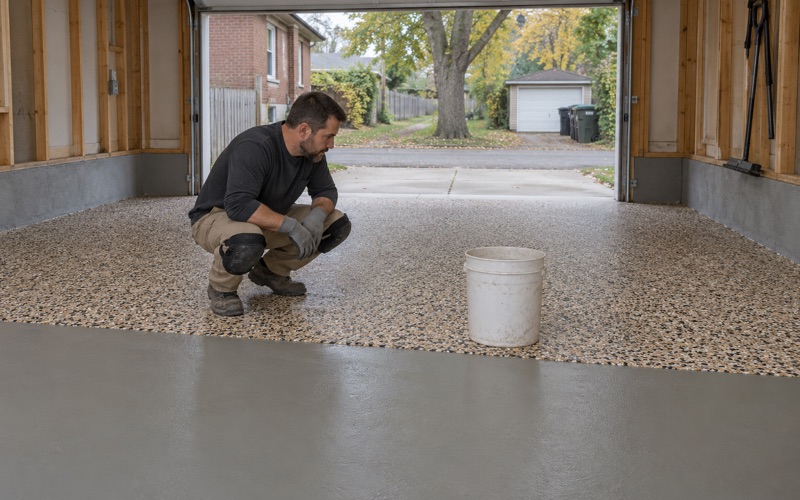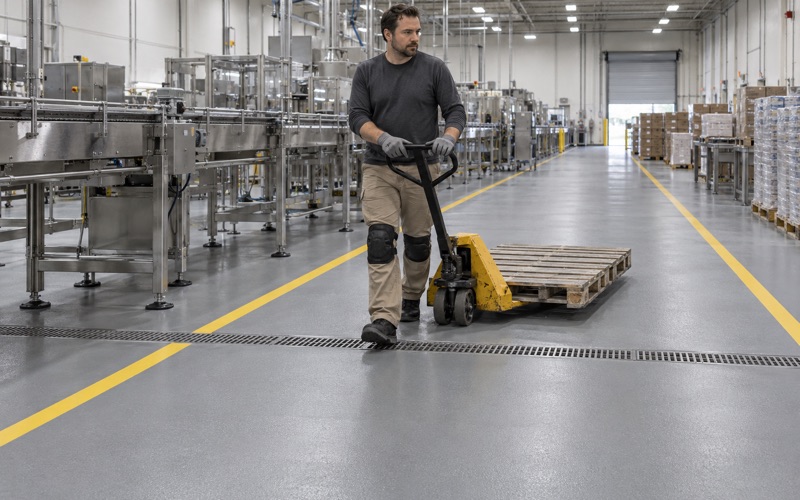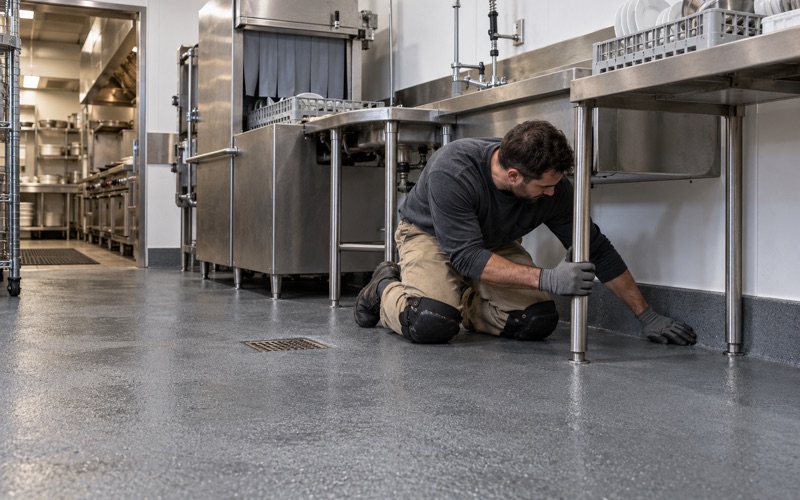
Downers Grove Epoxy Flooring has spent more than 20 years on epoxy-flooring in Franklin Park and the surrounding suburbs, and the warehouse jobs here ask a question many crews skip: what is going to sit on this floor? Our answer shapes the system we specify, from how the slab is opened to which zones get texture and which stay smooth.
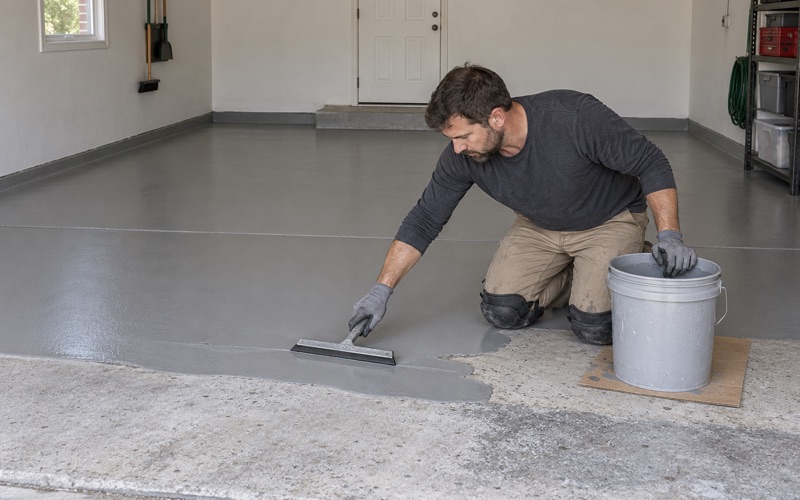
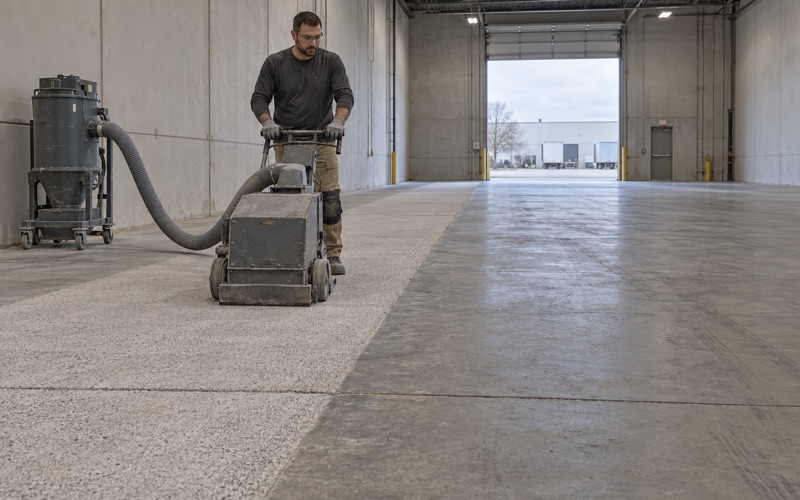
Every concrete surface we coat is opened with a diamond grinder or a shot blaster, never an acid etch, so the resin bonds to sound concrete with a measured profile. Before a price is final, a moisture test is written into the scope. The proposal then names the product line, the coat count and the finished thickness, which gives a facility manager something concrete to check the finished floor against.
That discipline matters most where the floor touches product rather than just carrying it. The sections below walk through one kind of building that makes the point well, and how we think about smooth staging areas, textured walkways and a slab that stops shedding dust.
A Flooring Carrier’s Hub on Seymour Avenue
Franklin Park is a village of 18,467 people at the 2020 census, sitting in Leyden Township in Cook County beside O’Hare. It was named for real estate broker Lesser Franklin, who bought acres of the area when most of it was farm fields. Today its industrial corridor along Seymour Avenue holds some of the area’s newer distribution buildings, and one of them houses a carrier whose freight is itself floor covering.
Xpress Global Systems at 10601 Seymour Avenue
Xpress Global Systems, known in the trade as XGS, lists its Chicago service center at 10601 Seymour Avenue. Trade press reported that the 70,000-square-foot Franklin Park service center opened in late February 2019, 30,000 square feet larger than the company’s previous Chicago facility. The company’s regional vice president called the location an optimal one, right next to O’Hare and the major expressways.
The XGS January 2025 network map shows the Chicago hub as full service: warehousing, local distribution, B2B final mile and outbound. The company started in 1986 as a long-haul carrier for the carpet industry, and it still describes itself as specializing in rolled goods.
CenterPoint O’Hare Building 1
The address is CenterPoint O’Hare Building 1, built from the ground up in 2018 at 225,891 square feet, with XGS as its first tenant. We have never worked in this building, and we have not seen its floors, handling equipment or room layout. We use it here because it describes a type of facility clearly, not because we know how this one is finished.
Looking for epoxy-flooring closer to River Forest? See Epoxy-Flooring Services in River Forest.
When the Freight Is Carpet, Sheet Vinyl and Turf
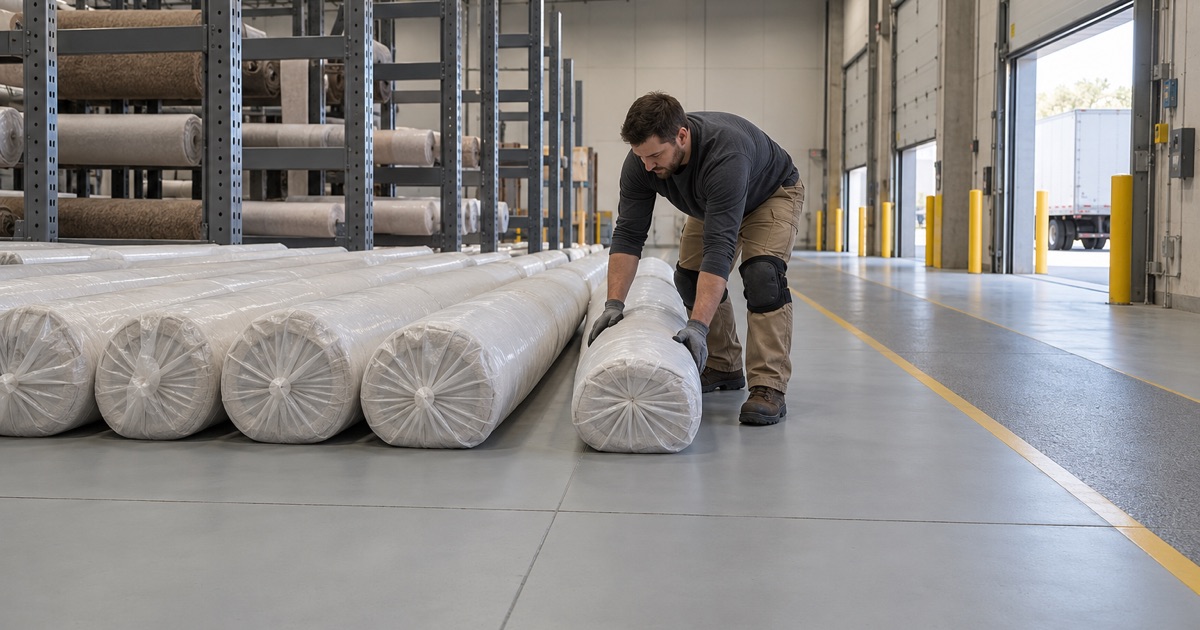
Most warehouse floor advice is about forklift wheels, pallet impacts and the occasional spill. A hub that handles broadloom carpet, sheet vinyl and turf adds a different concern, because the freight is a finished surface that someone will install in a home or business.
Product That Touches the Floor
Rolled goods are not always lifted clear of the concrete. In a facility of this kind, rolls are commonly set down, rolled into position and staged on the floor itself, and cartons of hard-surface flooring are stacked on it as well. Whatever the floor carries on its surface, whether grit, flakes of loose coating or fine concrete powder, has a chance of ending up on the product.
That is a different design target from a parts warehouse. A pallet of boxed hardware does not care much if the floor under it is slightly rough. A roll of sheet vinyl with its wrap scuffed open, or a carpet face picking up gray dust, is a damaged shipment.
Cartons, Pallets and Wheel Loads
Smooth does not mean soft. The same floor that has to be gentle on a roll face still carries pallet jacks, forklifts and stacked cartons of hard-surface flooring all day. A thin film that looks fine on handover can wear through in the busiest lanes within months.
So the build has to do two jobs at once. We size the body coat thickness to the traffic the operator describes, then choose a topcoat that resists scuffing from wheels without adding texture. The finished thickness goes into the proposal in writing, so it can be measured rather than assumed.
Reading the Building Before the Bid
We start any flooring-distribution job by asking the operator how product moves: where it lands off the trailer, where it waits, and where people walk versus where goods rest. That map drives every later decision. A single texture across the whole building is easy to quote, but it rarely suits a floor where the freight and the foot traffic need opposite things.
We also map cracks, spalls and any old coating before we price anything. If a section of slab is too broken to coat well, we say so and recommend repair or replacement first, rather than putting a fresh finish over a problem that will show through in a season.
What Texture and Chipped Edges Do to Roll Goods
The two failures we design against in a product-contact zone are abrasive texture and coating edges that chip. Both are common on floors built for traction first, and both can harm finished flooring freight.
Broadcast Grit Against a Wear Layer
A quartz aggregate broadcast locked under a topcoat is one of the most reliable ways to build slip resistance into a resin floor. It is also, by design, a field of small hard peaks. Drag a roll of sheet vinyl or a wrapped carpet roll across it and those peaks can scuff a wear layer or abrade the wrap. Vinyl flake broadcast is less aggressive, but it still adds edges and relief that a smooth floor does not have.
For staging and handling zones, we generally specify an aggregate-free finish: a 100% solids epoxy body coat with a smooth urethane or polyaspartic topcoat. The result is easy to sweep, gives roll wraps nothing to catch on, and still resists the wear of pallet jack and forklift wheel loads.
A smooth floor does need housekeeping to stay safe underfoot. Dust, stretch-wrap scraps and spilled packing material make any glossy surface slicker, so we talk through cleaning routines with the operator. A swept smooth zone next to a textured walk lane is a better plan than a gritty floor everywhere.
Where Coatings Chip
Chips usually start at the edges. A coating feathered out to nothing at a doorway, a joint or the end of a zone has no thickness to resist a pallet corner, and once a flake lifts, it becomes loose debris with a sharp edge. That edge can snag a roll wrap and the flake itself can ride along on product.
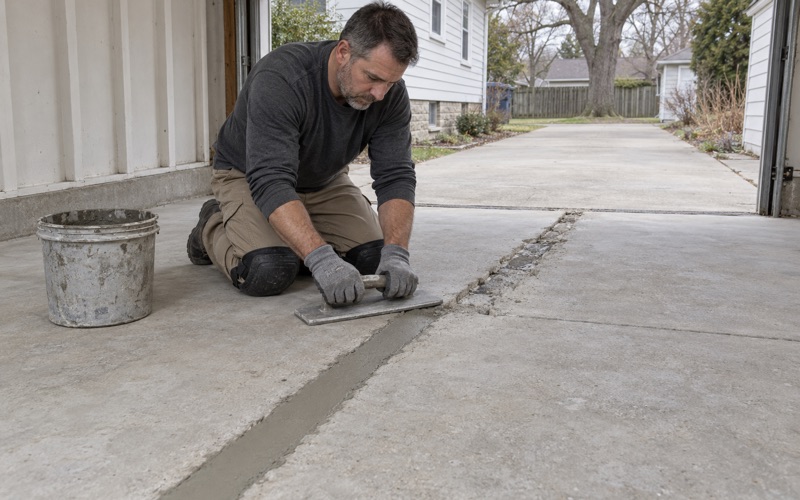
We cut keyed terminations into the slab where a coating stops, so the edge is buried rather than exposed. Control joints get filled with a semi-rigid filler rather than bridged with coating, and the grinding profile under the whole system is matched to the coating thickness on the ICRI CSP scale. A well-bonded edge with real thickness is much less likely to chip than a thin film over a smooth slab.
Repairs Before They Spread
When a floor already has chipped areas, we repair them by grinding back to sound coating, filling, and recoating with a defined edge. Patching over loose material only moves the chip line outward. Our written scope shows where the repairs are and what the repaired zones will be finished with.
Smooth Staging Zones, Textured Walk Lanes and a Non-Dusting Slab
None of this means giving up traction. It means putting texture where people walk and keeping it away from where product rests, then making sure the slab itself is not adding dust to the finished goods.
Zoning the Slip Texture
We lay out walk lanes and pedestrian routes as their own zone, with a broadcast and topcoat chosen for slip resistance. Staging and handling areas stay smooth. The boundary between them is drawn on the floor plan and in the proposal, so the specification names which broadcast and topcoat go where instead of promising a vague non-slip floor.
Color helps here too. A walk lane coated in a contrasting color with its texture tells forklift drivers and pickers where to walk, and it reminds anyone setting down a roll that the smooth gray zone is the place to do it.
The line between zones is built, not just painted. Where a textured lane meets a smooth staging area, we finish the transition with a clean, defined edge so there is no raised lip of aggregate for a roll or a pallet wheel to catch on.
Dust From Bare or Worn Concrete
Uncoated or worn concrete often dusts, giving off a fine powder as traffic wears at its surface. On a floor holding cartons and roll ends, that powder settles on the freight. Light-colored carpet faces and the top of a carton are where it shows first.
Where a client wants an uncoated slab in some zones, a lithium silicate densifier hardens the surface and cuts down on dusting. Where the budget allows full coverage, a sealed resin system stops the problem at the source. Either way, the goal is a floor that does not contribute to the soiling of finished flooring products.
Keeping Our Own Dust Off the Freight
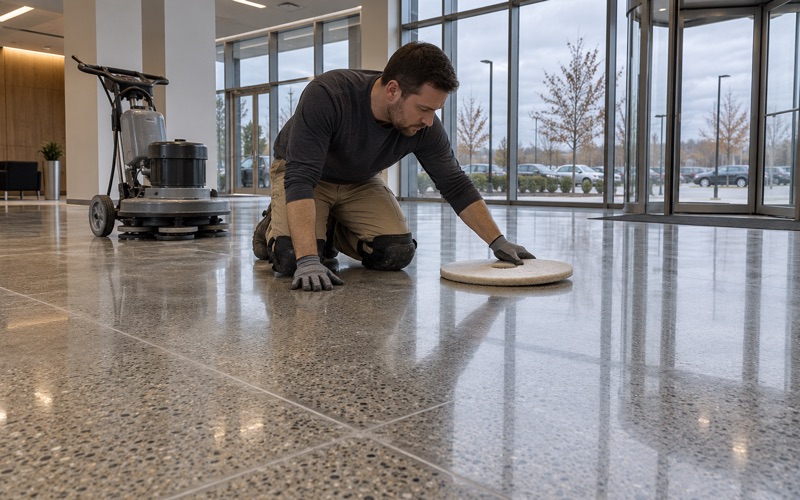
Surface preparation creates dust of its own, which is the last thing a flooring distributor wants drifting onto stock. Our grinders and shot blasters run with vacuum capture at the machine, so dust goes into a collector rather than into the air or toward a floor drain. We also phase work around operating hours, with overnight and weekend windows when a space cannot shut down.
Moisture and the Long Term
A smooth, aggregate-free finish only stays smooth if it stays bonded. We test slab moisture with methods such as ASTM F2170 in-situ relative humidity probes before we commit to a system, and we add a moisture-mitigation primer when the readings call for one. An ASTM D4263 plastic sheet test can serve as a quick first screen, and ASTM F1869 calcium chloride testing is another option, but the probe readings are what we rely on for a large slab.
Our warranty conversation names moisture as the first exclusion, before any work is sold, so nobody is surprised later about what the coverage includes.
- 20+ Years of Floor Work
- Moisture Tested in Writing
- Free Written Quotes