
Downers Grove Epoxy Flooring installs flake epoxy floor systems in Downers Grove, IL, serving surrounding cities including Hinsdale, Burr Ridge, Western Springs, La Grange and Westchester. Over more than 20 years, the full-broadcast vinyl flake floor has become the system we install more than any other, because it gives a garage, basement or shop a thick, textured, forgiving surface that looks clean even on the days it is not.
A flake floor is only as good as what lies under it, though. Every system starts with a slab opened by a diamond grinder or a shot blaster, cracks and old coatings mapped and repaired, and a moisture test written into the scope before the price is final. The proposal names the base coat, the flake product and blend, the topcoat and the finished thickness, so you can compare the floor you get with the floor you were quoted.
The sections below cover how a flake floor is built, how to choose chip size and blend, where flake floors work best, and how to care for one.
How a Flake Epoxy Floor Is Built
Base Coat and Full Broadcast
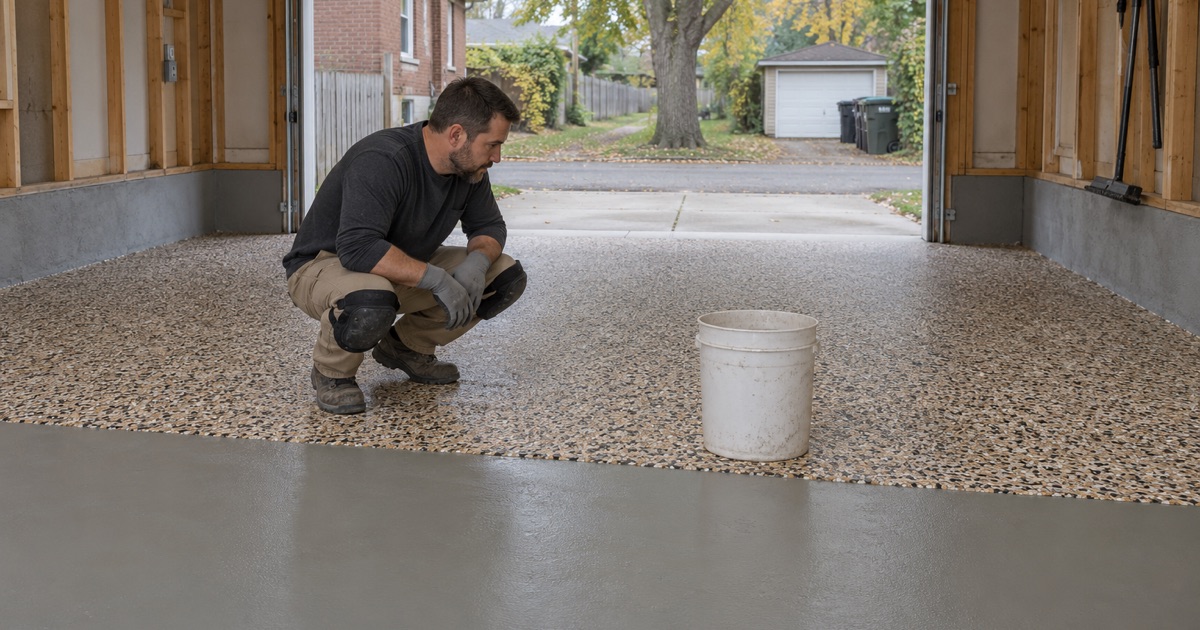
After grinding and repairs, a pigmented base coat of 100% solids epoxy or polyurea goes down, and vinyl flakes are broadcast into it by hand until the wet coating is completely covered. The flakes sink into the base and lock in as it cures, building thickness and texture that a bare coating alone cannot match.
Once the base has cured, the loose flakes are scraped and vacuumed off, leaving a firmly bonded layer of chips. Scraping knocks down any standing edges so the topcoat can encapsulate the flakes evenly instead of leaving sharp points that catch dirt.
Clear Topcoat and Texture
The clear topcoat seals the flakes, sets the sheen and determines how much grip remains. Polyaspartic and polyurea topcoats are popular for flake floors because they resist sunlight, abrasion and chemicals and do not amber the way a standard epoxy clear coat can. Where a floor gets wet, we add a fine aggregate to the topcoat so the texture is built in.
Partial Broadcast Options
Some owners prefer a partial broadcast, where chips are scattered over a visible base color for a lighter, more modern look. It uses less material and shows more of the base, but it also shows more dust and slab variation, so we recommend it mainly for low-traffic rooms and showrooms rather than daily-driver garages.
Choosing Flake Size, Blend and Color
Chip Size and What It Hides
Flakes come in several sizes, from fine chips that read like a speckled countertop to large, bold chips that make a statement. Smaller chips give a tighter, more uniform look, while larger chips hide more variation in the slab and read better from across a big room. In most garages, a medium chip strikes the best balance between appearance and practicality.
Blends for Garages, Basements and Shops
Mixed blends of grays, tans, blacks and whites hide dust, salt residue and tire marks between cleanings, which is why they dominate garage floors. Basements often look best in warmer tans and browns that soften a below-grade room, and shops sometimes choose a lighter blend that reflects more light onto the work surface. We bring sample boards to the estimate so you can see blends against your own walls and lighting.
Matching Brand and Interior Colors
Commercial clients can choose blends that coordinate with brand colors or interior finishes, and custom blends are possible on larger floors. We record the exact product and blend used, which makes future repairs and additions far easier to match.
Where Flake Epoxy Floors Work Best
Garages Facing Salt Season
Garage floors here carry calcium chloride and rock salt brine in on tires every winter. A full-broadcast flake floor with a chemical-resistant topcoat keeps that brine on the surface where it can be rinsed away, and the texture and blend hide the haze it leaves between washes. Thick, well-bonded flake systems also resist the hot tire pickup that lifts thin store-bought coatings.
Cold matters too. An unheated garage in deep winter is told to wait, because epoxy cures slowly on a cold slab and can blush when the surface sits near the dew point, so we schedule garage flake floors by measured slab temperature rather than the calendar.
Basements, Laundry Rooms and Workshops
In basements, a flake floor brightens the space, cleans easily and handles laundry spills, workshop debris and home gym equipment. Basement slabs must be moisture tested first, and when readings call for it, a moisture-mitigation primer goes under the flake system. We also explain what the coating warranty excludes for moisture vapor and hydrostatic pressure before you commit.
Commercial Back Rooms, Clinics and Showrooms
Flake floors work well in commercial back rooms, break rooms, clinic corridors, auto service bays and showrooms, where a seamless, durable and attractive floor is needed. We phase commercial work around opening hours and use overnight and weekend windows when a space cannot close, choosing products inside the Illinois VOC limits for floor coatings.
Caring for a Flake Epoxy Floor
Routine Cleaning
Sweep or dust mop regularly to keep grit from grinding into the topcoat, and wash with a pH-neutral cleaner and a soft mop or deck brush. In winter, squeegee slush out of the garage and rinse the floor on mild days to clear salt residue.
Protecting the Topcoat
Use plywood or pads under jack stands and heavy equipment, avoid dragging sharp metal across the floor, and wipe up oil and chemical spills promptly. Walk-off mats at doors keep a surprising amount of grit off the floor.
Recoating Down the Road
When the topcoat eventually wears in traffic lanes, it can be cleaned, abraded and recoated without removing the flake layer. That refresh restores gloss and protection for a fraction of the cost of a new floor, as long as the original system was properly bonded to begin with.
- 20+ Years of Floor Work
- Moisture Tested in Writing
- Free Written Quotes