Downers Grove Epoxy Flooring has spent more than 20 years on epoxy flooring in Alsip and across the south suburbs, and the floors we think hardest about here are the ones that live next to a modern diesel. Fleet bays, truck service shops and home garages with a diesel pickup all share one fluid that older floors never had to handle, and how that fluid behaves once it hits concrete decides what kind of surface makes sense.
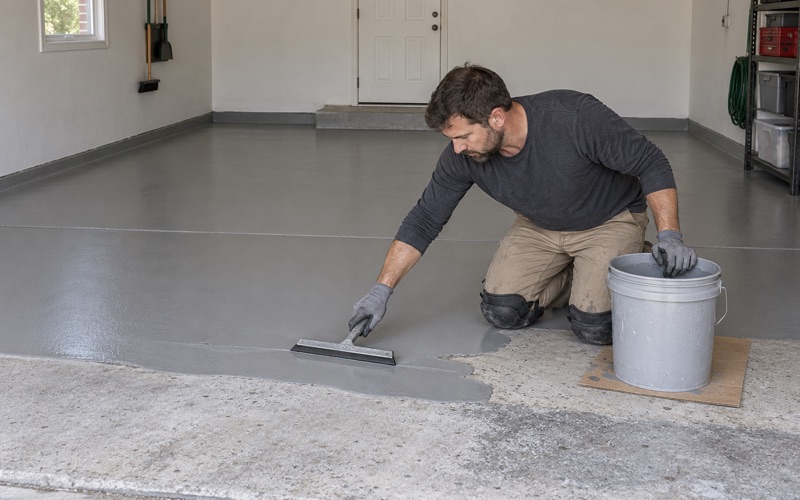
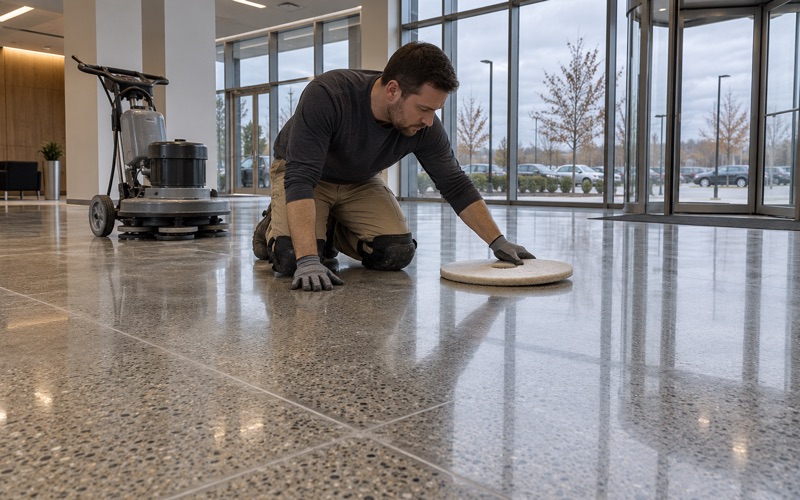
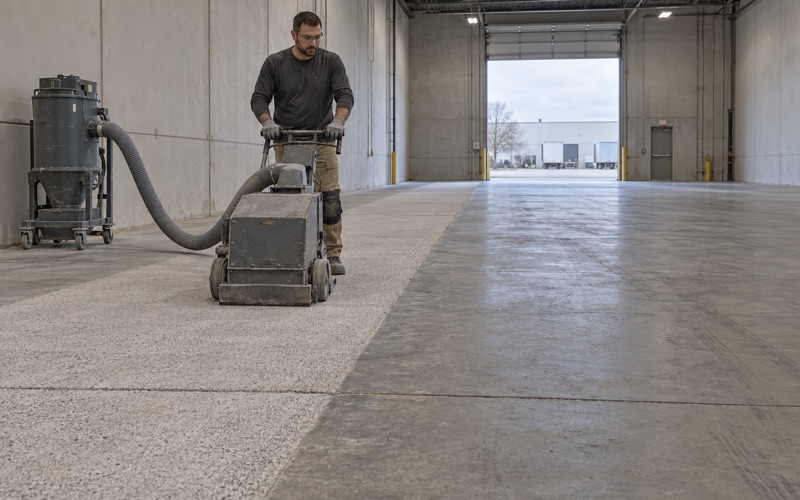
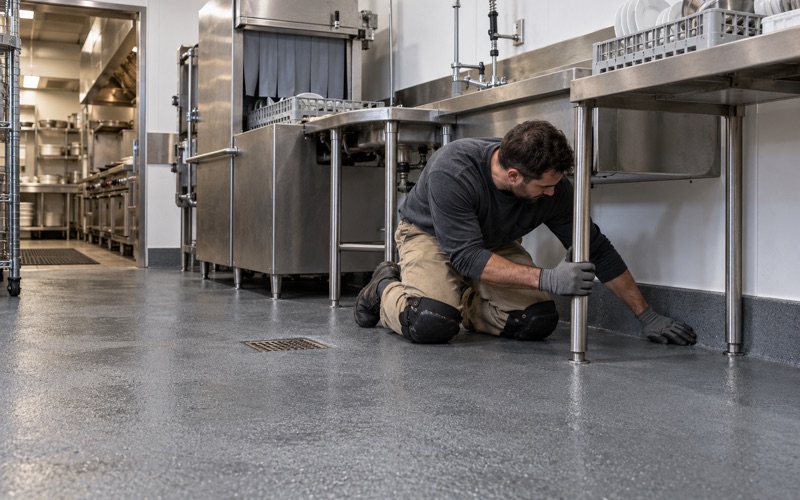
Our approach starts the same way on every slab. We open the concrete with a diamond grinder or a shot blaster instead of an acid etch, so the coating has a real profile to bite into, and we map cracks, spalls and old coatings before anyone talks about color. If a slab needs repair or replacement first, we say so plainly rather than coating over a problem.
The written proposal names the product line, the coat count and the finished thickness, so you can hold the installed floor up against the quote. A moisture test is part of that scope before the price is final, and the warranty conversation happens up front, with moisture named as the first exclusion.
DEF Lanes at a 24-Hour Truck Stop on Kedzie Avenue
Alsip sits on the Tri-State corridor, and freight traffic is a daily fact of life in the village. The clearest local example of what that traffic needs is the Pilot Travel Center on Kedzie Avenue, at 12680 S. Kedzie, which the operator lists as open 24 hours with diesel lanes and DEF lanes alongside truck parking, showers and a CAT scale. That address geocodes inside the Village of Alsip, in Worth Township, Cook County.
We have no connection to that truck stop, and we have not seen where its DEF is dispensed or how any of its floors are finished. We mention it because it shows how routine diesel exhaust fluid has become on this side of the county. When a truck stop advertises dedicated DEF lanes, the fluid is no longer a specialty product; it is something every diesel owner and fleet tech in the area handles.
Why a fluid at the pump matters to a floor indoors
The same trucks that fill at a fuel island end up in service bays, fleet garages and warehouse docks around Alsip. DEF travels with them in jugs, totes and dispensing carts, and wherever it is poured, some of it drips. A floor that sees those drips needs to be judged against what the fluid actually does, not against what an oil stain does.
Who we hear from about it
The calls tend to come from three places. Small fleet operators want a bay floor that a mop and hose can keep clean, contractors with diesel work trucks want their shop floor to stop showing white marks, and homeowners with a diesel pickup want to know whether the jugs on the garage shelf are a problem for a new coating. The answer starts with the chemistry.
Looking for epoxy-flooring closer to Evergreen Park? See Epoxy-Flooring Services in Evergreen Park.
Urea, Water and a pH Near 10: Why the Coating Is Not the Weak Point
Diesel exhaust fluid is mostly water with urea dissolved in it. One supplier’s safety data sheet lists urea at 15 to 40 percent by weight, describes a clear, colorless liquid with a slight ammonia smell, and puts the pH between 9.8 and 10. That same sheet lists its freezing point as minus 12 C, or 10.4 degrees F, and does not classify the product as hazardous under GHS.
That profile matters because it rules out the scare story. DEF is not an acid, and the sheet lists strong acids, strong bases and strong oxidizers as things it is incompatible with, not things it is. Anyone telling you a urea solution will chew through a properly installed resin floor is selling fear rather than describing the fluid.
What one manufacturer’s chart says
We look at chemical-resistance charts before we pick a system, and urea shows up on them. One manufacturer’s immersion chart, dated 2021, rates 30 percent urea at its top score on that company’s own solvent-free epoxy, meaning no harmful effect after long-term contact. That is one maker’s test of one product, not a rating every coating earns, so we check the data sheet for the exact system we propose rather than assuming.
Where 100% solids epoxy and a topcoat fit
For a fleet bay or diesel garage we usually build around a 100% solids epoxy base, then add a polyaspartic or polyurea topcoat where the floor will see tire traffic and frequent cleaning. Hot tire pickup and amine blush are installation issues, not DEF issues, and we manage both through product choice and by curing to slab temperature and dew point rather than to a calendar date. The point of the system is a tight, nonporous surface, because that is what the cleanup depends on.
Do Not Let It Dry: Crystals, Tracking and the SDS’s Dust Note
The real trouble with DEF on a floor starts after the liquid leaves. As the water evaporates, the urea is left behind as white urea crystals, the crusty residue fleet techs know from around fill caps and dispenser nozzles. On bare or porous concrete the solution soaks in first, so the white bloom keeps coming back from inside the slab long after the surface was wiped.
What the safety data sheet actually says
The supplier’s sheet is direct about cleanup. Its spill section says to clean up spills immediately and states, in plain words, ‘Do not allow product to dry out completely.’ The reason it gives is narrow: dried residue that is allowed to accumulate and then gets dispersed in the air may form combustible dust concentrations. That warning is about built-up dried material scattered into the air, not about a fresh drip, and we describe it that way.
The same section tells users to contain larger spills with dikes or absorbents so the fluid does not reach sewers. A separate spill-kit guide makes a related point: DEF should not be washed into the storm system or left to dry, because the residue stays behind and can still wash off when it rains. A floor plan for a DEF area should account for where rinse water goes, not only how the surface looks.
Tracking is the everyday cost
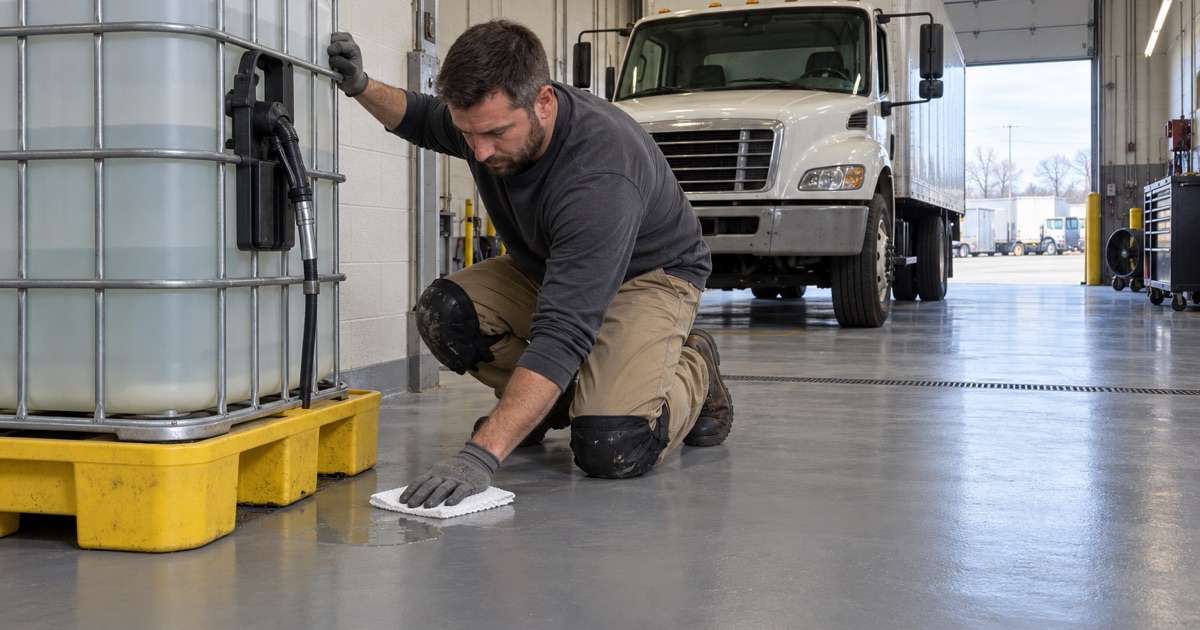
Even when nobody is worried about dust, crystals that dry on the floor get picked up by boots, tires and cart wheels. They end up across the shop, in the office doorway and in the truck cab. Fleet-service sources note that dried DEF redissolves in water, which is why the practical goal is a surface where a quick rinse while the drip is still wet finishes the job.
Why sealed and smooth wins here
A smooth, sealed coating keeps urea solution on top of the floor instead of letting it wick into the concrete. A hose, a squeegee and a mop then clear it before it can crystallize, and nothing is left in the pores to bloom later. When we spec a slip-resistant texture for a wet bay, we name the broadcast and topcoat that create it, and we balance grip against how easily that texture rinses clean.
DEF Jugs and Diesel Pickups in an Alsip Garage
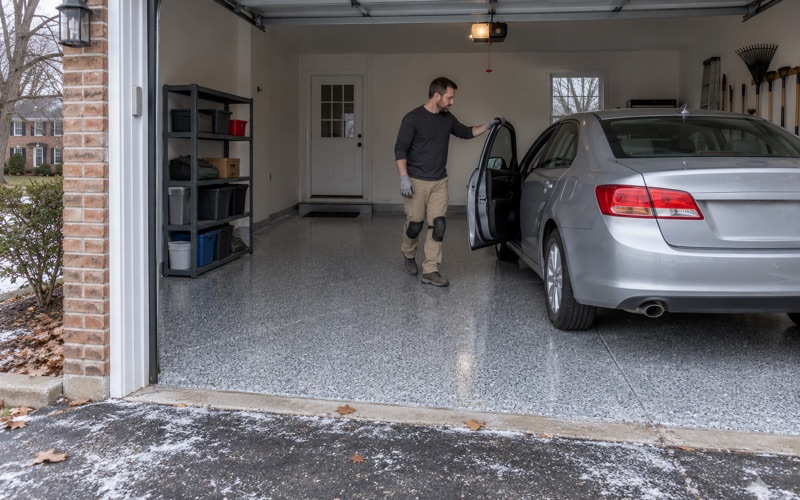
Most of the village’s housing went up between the 1950s and the 1980s, and very little has been built since 2000, so a garage floor here is almost always a retrofit over an older slab. More of those garages now hold a late-model diesel pickup and a couple of jugs of DEF on a shelf or in the bed. Topping off the tank in the driveway or garage is where the home drips happen.
Preparing an older slab for a diesel owner
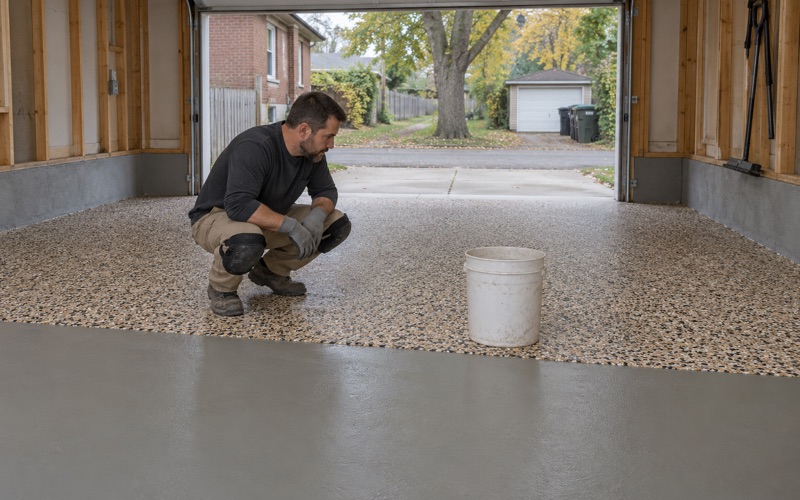
Older garage slabs often carry patches, cracks and leftover sealers, so the crack and coating map comes first. We grind or shot blast to a clean profile, capture the dust at the machine with a vacuum rather than rinsing it toward a drain, and run a moisture test before the price is final. If the slab is too far gone, we tell you, and if it is being replaced, we point you to the village rules on the new pour before anyone quotes a coating.
Habits that keep the floor clean
The floor does its part, but a few habits help. Set DEF jugs on a tray or mat so a dribble from the cap lands somewhere easy to wipe, and rinse any drip with water the same day instead of waiting for the weekend. Store jugs where they will not be knocked over by a bike or a mower, and keep them off bare concrete near the door, where tires will roll through any residue.
Scheduling the work in Alsip
Alsip’s Building Department handles construction permits in the village, and the village collects a contractor license fee; we confirm what applies to a given job before we start. Cure timing follows the slab temperature and the dew point spread at the surface, so an unheated garage in the coldest weeks is told to wait. For larger home jobs we provide a written contract and the Illinois Home Repair: Know Your Consumer Rights pamphlet before any grinding begins, and fleet bays that cannot close are phased into overnight or weekend windows.
- 20+ Years of Floor Work
- Moisture Tested in Writing
- Free Written Quotes